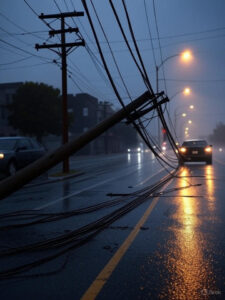

Good
- GO BAG (see 3-Day Go Bag)
- Develop an Emergency Plan1: Ensure all household members know what to do, where to go, and how to contact each other if separated. Create a communication plan and designate a meeting location2.
- Non-perishable food for each person (minimum 3 days)
- Five, one-gallon water jugs (or storage equivalent) per person3
- Full tank of gas, always run on top half, you will have to fill it sometime anyway
- Radio4; Battery/USB or hand crank powered
- Flashlight or headlamp, USB/Battery rechargeable for each person
- Spare batteries, AAA, AA, C, etc. Your car and a USB cord are your largest power bank
- Medications: Maintain a one-week supply of prescribed medications, EpiPins, and inhalers. Cold storage medicines like insulin will require a cooler.
- Alternative fuel and means for cooking: one burner propane stove, portable charcoal stove, camp stove, solar oven, backpacking stove, or pre-plan with family or friends who have this stuff5. DO NOT BURN FUEL INDOORS!! Open flame candles are discouraged.
- Manual can opener or key chain P38
- Supply of unopened towelettes, one package per person
- Pet Care: Ensure pets are safe, fed, and have access to water and shelter.
- Cash on Hand: ATMs and card readers may not work. Keep small bills and coins available. $100 per adult, in small bills, is a good baseline.
- List of emergency contacts
- Consider any individual’s special needs not covered above.
Better
- All items included under Good
- FRS Radio with emergency channels and NOAA channels
- Maintain 5-10 gallons of gas, safely packaged and stored, gasoline container or a 5-gallon bottle of Propane6, 16-oz propane bottles, or fuel for your stove of choice
- One five-gallon bucket filled with charcoal briquettes and a firmly attached lid
Betterer
- All items included under Good & Better
- Honda Generator or similar
- A portable charger power bank like this
- LED lantern or equivalent, pre-charged, that also takes batteries, per person7
- Install surge protectors, know how to manually open electric garage doors, and safeguard sensitive electronics.
- Cash, $500 for the household in 1s, 5s, 10s, & 20s
- 72 hr. Dehydrated food kit like this, times two8
- Upsize the above to include enough for children
- Mess kit, gas stove & cookware, solar oven
Resource Links
- Heat Survival Plan – See section
- FEMA Power Outage Information Sheet
- Battery Backup for Medical Devices
- Ready.gov
Footnotes
1 Make a Plan @ Ready.gov’s Are You Ready Guide on pg. 14
2 The iPhone version 14 or newer has a built-in satellite-based texting feature that does not need cell service to operate. A similar feature is available on Android phones. An excellent means to communicate during unusual occurrences.
3 This is in addition to your go bag water allowance and would be used for washing, cooking, cleaning, flushing, etc.
4 For local news, weather, NOAA emergency broadcasts, family communication
5 We once visited a humble family in Honduras whose primary stove was built from three cinderblocks and a 12’x12’ grill with a few lumps of charcoal for heat
6 Gas and large propane tanks are best stored in a garage or an external shed. Smaller bottles of liquified fuel (propane, butane, etc.) when stored the way you see them in the store display should be ok, when in doubt, store without!
7 Yes, you could have candles on hand or a Coleman lantern. Candles are a fire hazard, and the lantern is a burn and carbon monoxide hazard. All three create the potential for new emergencies if not handled correctly.
8 Remember, dehydrated food will require a backpacking stove and bowls